Research Network
Research Areas
In 2015, UN member states agreed to 17 global Sustainable Development Goals (SDGs) to end poverty, protect the planet and ensure prosperity for all. My research contribute towards the following SDGs:
Field of interest
Critical urban and architectural studies,
Socio-environmental Justice,
Climate adaptation,
Urban risk and resilience
Field of specialization
Research-led Design,
Critical Spatial Methodologies,
Participatory Design
Graduate Research
Details
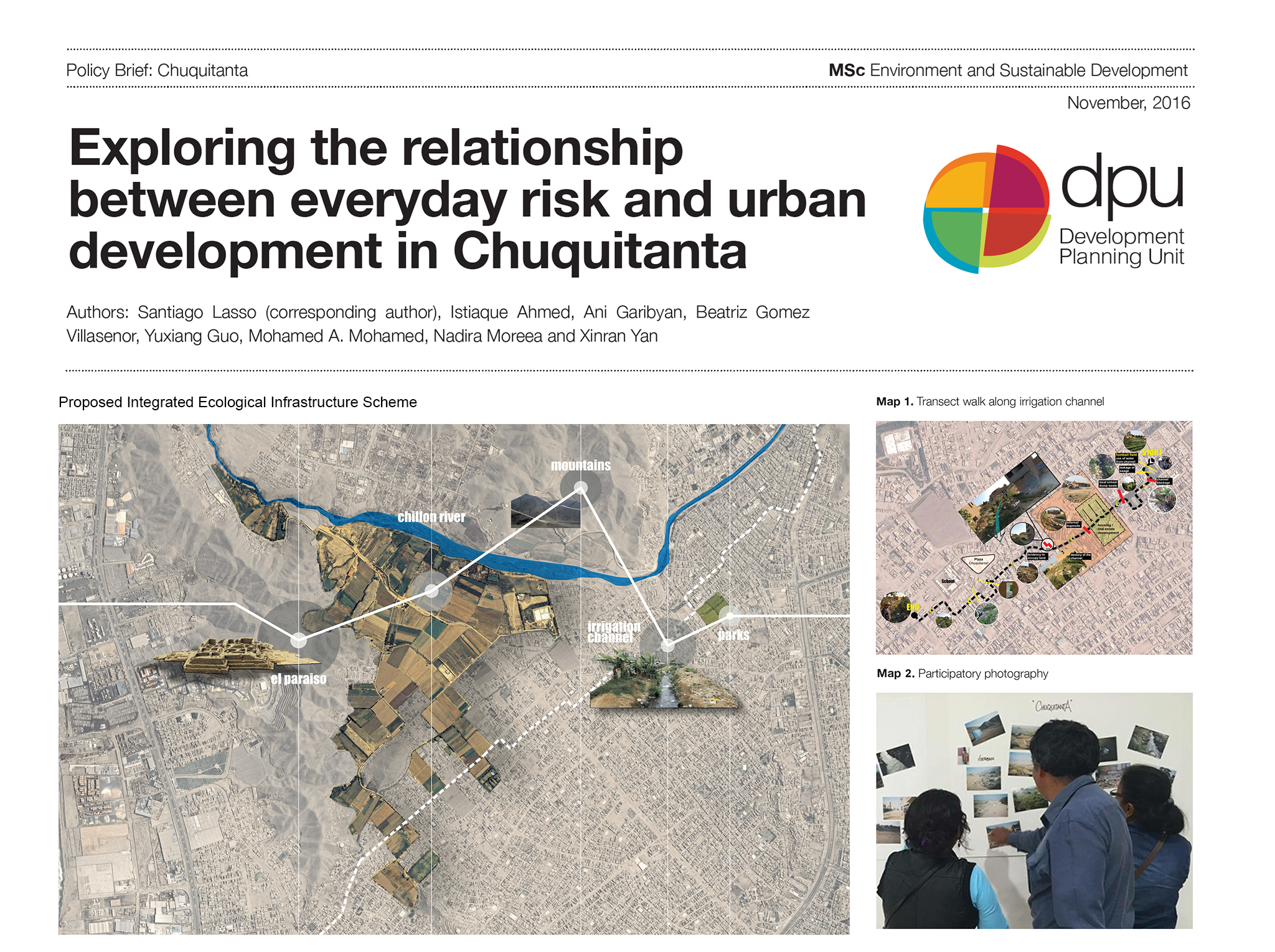
The objective of the project is to contribute to the understanding of the relationship between everyday risk and urban development in Metropolitan Lima and to develop an environmental action plan in collaboration with local communities and organisations for selected case studies within this jurisdiction. The aim is to provide a thorough diagnosis of the problematic at hand, explore scenarios and develop strategies that inform this environmental action plan to ensure that the plan is well- embedded in the wider socio-political, economic and ecological ongoing processes, and can contribute to transformative change.
Having acquired knowledge of the broader context of the urban region of Lima, and the environmental injustices manifested in Lima Este, Centre, Norte, Sur and Callao, this project builds upon the diagnosis, and grounds the investigation in six case studies: Barrios Altos, Costa Verde, Jose Carlos Mariátegui, El Agustino, Chuquitanta and Pachacamac. These were chosen in consultation with the local partners of DPU, UCL within ‘Foro Ciudades Para la Vida’, CENCA and CIDAP and offer unique readings of the city, enabling a better understanding of the urbanisation processes driven through institutional, private and local communities' practices, and environmental trends operating in Metropolitan Lima. Furthermore, the research is framed within the action-learning platform Learning Lima (www.learninglima.net), and the action-research project entitled cLIMA sin Riesgo (www.climasinriesgo.net) and the outcomes of the work will provide real contributions to local communities and public organisations.
Type of Project: Group Work
Duration: Dec 2015 - May 2016
BArch Terminal Project (Design Research)
Details
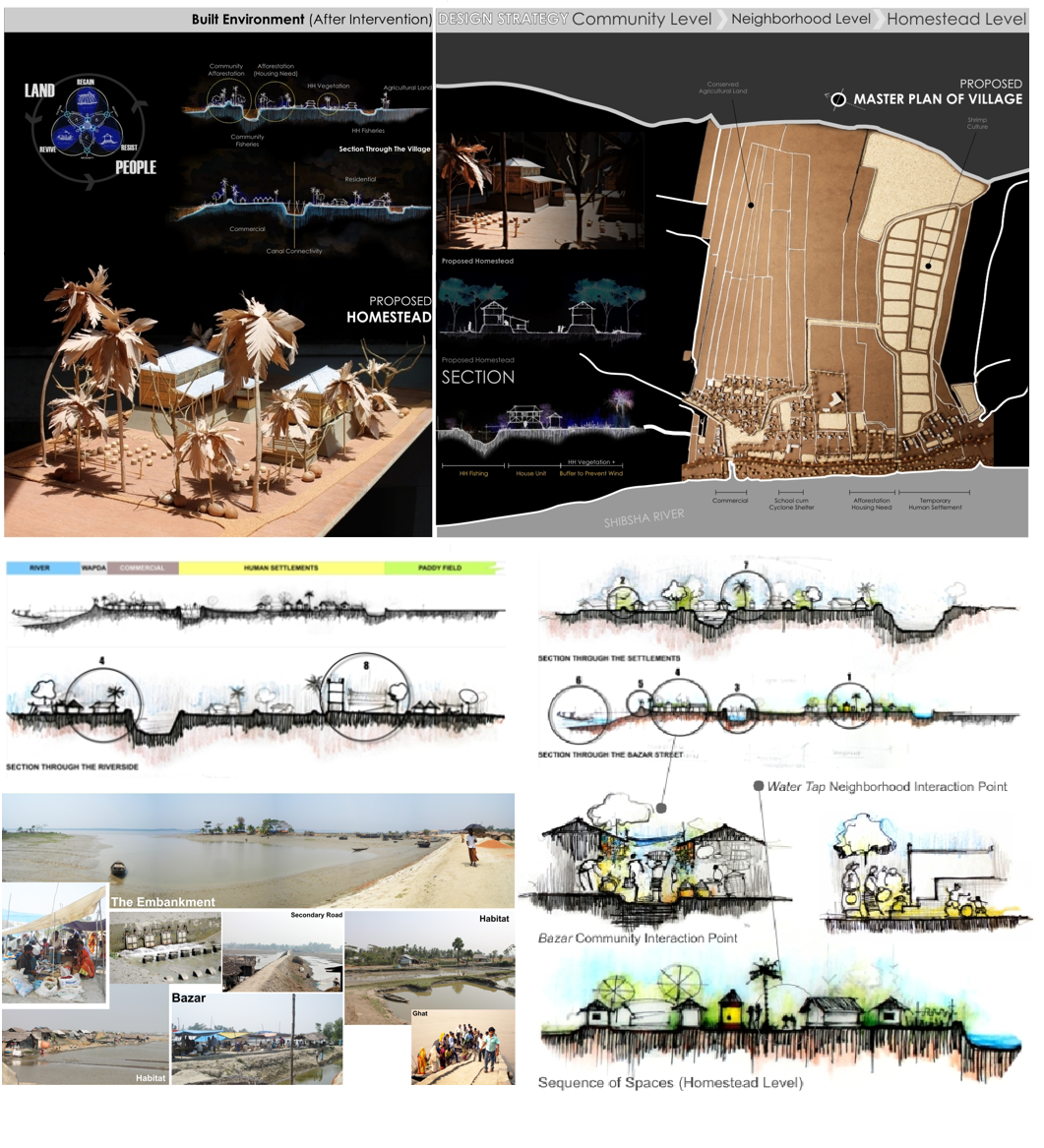
The aim of this Barch thesis (terminal) project is to develop an affordable, climate-resilient rural settlement model for cyclone-prone coastal areas of Bangladesh that strengthens the self-help capacity of marginalized communities while reducing loss of life, housing damage, and long-term vulnerability. Responding to the country’s increasing exposure to cyclones and climate-induced risks, the project seeks to critically examine weaknesses in traditional settlement patterns and building practices, and to identify indigenous techniques of cyclone-resistant construction that can be systematically enhanced through appropriate architectural, structural, and planning interventions. By integrating climate-resilient landscape design, context-specific infrastructure, and disaster-resistant housing using locally available materials, the project aims to propose a sustainable and cost-effective settlement framework. Rather than attempting to prevent disasters, the objective is to mitigate their impacts by rationalising economic resources without compromising spatial quality, safety, or cultural appropriateness, thereby contributing to more resilient coastal livelihoods and built environments.
Architectural Objectives:
To develop a context-sensitive rural settlement model appropriate to the climatic, socio-economic, and cultural conditions of coastal Bangladesh.
To design disaster-resilient housing prototypes that minimise structural failure during cyclonic events, particularly addressing roof uplift, wall stability, and foundation performance.
To formulate structurally efficient building systems based on traditional construction knowledge and locally available materials, enhanced through appropriate modern architectural and engineering principles.
To integrate passive environmental strategies and sustainable design principles that improve thermal comfort, durability, and resource efficiency under extreme climatic conditions.
To translate architectural knowledge and design innovation into the rural sector in a manner that is replicable, affordable, and adaptable for community-led implementation.
Type of Project: Individual Project
Duration: Six Months